Plants
Evening Primrose, Yellow Missouri / Oenothera missouriensis
-
4.95 € Yellow Missouri Evening Primrose (Oenothera missouriensis)
9798J - Available
-
4.45 € Yellow Missouri Evening Primrose (Oenothera missouriensis)
9798K - Available
-
3.95 € Yellow Missouri Evening Primrose (Oenothera missouriensis)
9798L - Available
-
3.45 € Yellow Missouri Evening Primrose (Oenothera missouriensis)
9798M - Available
-
2.95 € Yellow Missouri Evening Primrose (Oenothera missouriensis)
9798N - Available
-
0.40 € FERTILISER
9798A - Available
-
Geographical origins: United States
Adult size: Height up to 40 cm, width up to 60 cm.
Foliage: Deciduous.
Soil type: All types, poor and well-drained.
Climate: Hardy down to -20°C (-4°F).
Exposure: Full sun.
Planting density: 5 plants/m²
Properties and uses:
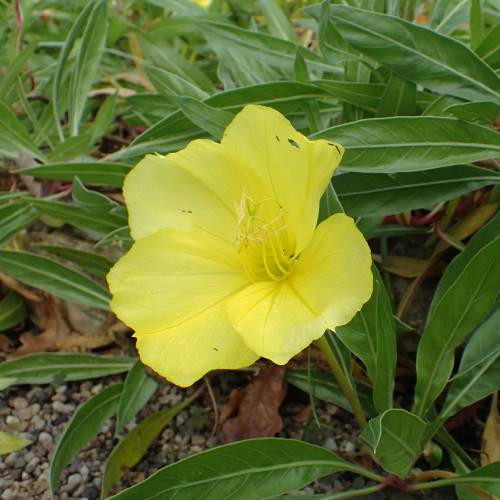
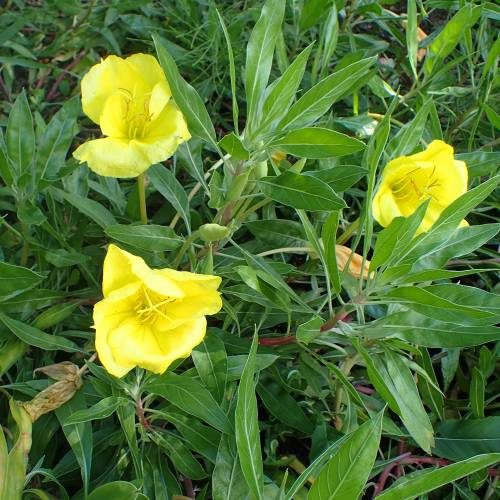
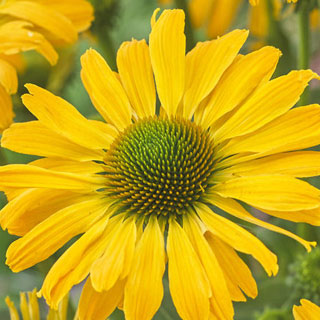
The Missouri evening primrose (Oenothera macrocarpa) is a mat-forming perennial, ideal for brightening up the sunniest and driest areas of your garden. From June to October, it produces bright yellow flowers, perfect for adding a splash of color to arid slopes, rock gardens, or flower bed borders.- Abundant and fragrant blooms: Its trumpet-shaped, lemon-yellow flowers measure up to 10 cm in diameter. They open early in the morning and late in the afternoon, thereby avoiding the harsh midday sun. Highly attractive to pollinators, they release a soft, subtle fragrance.
- Highly resilient: Native to the rocky plains of North America, this evening primrose thrives in full sun, poor, stony, or even limestone soils. It is exceptionally drought-tolerant.
- Low-maintenance ground cover: With its vigorous habit (standing at around 20 cm tall with a 50 cm spread), it naturally suppresses weed growth without ever becoming invasive.
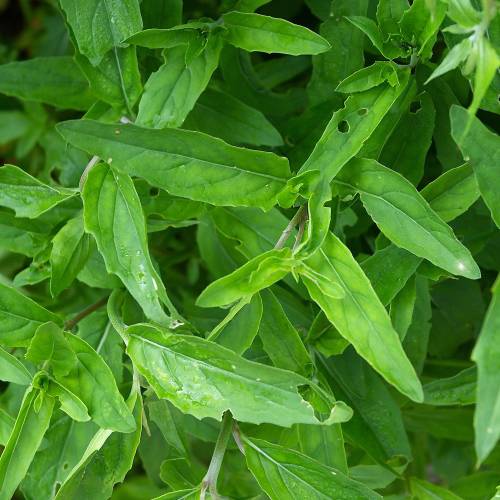
- Autumn interest: The show goes on after the flowering season. In autumn, it features highly ornamental winged seed pods, and its foliage turns a beautiful shade of red with the first cold spells.
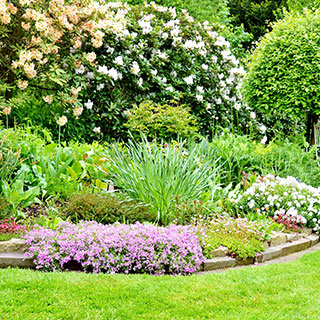
You can pair the Missouri evening primrose with lavender, whose upright habit and purple spikes will contrast beautifully with the primrose's low-growing habit and vibrant yellow.
Hardy sedums also make excellent companion plants, introducing new foliage textures close to the ground.