Carob tree / Ceratonia siliqua
-
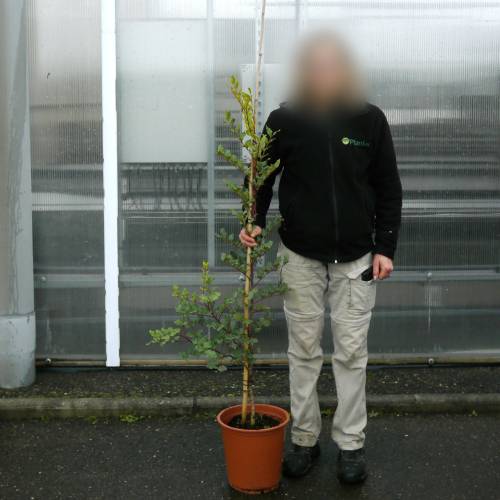
89.50 € Carob tree (Ceratonia siliqua)
9782L3 - Available
-
58.97 € Carob tree (Ceratonia siliqua)
9782K1 - Available
-
56.21 € Carob tree (Ceratonia siliqua)
9782K2 - Available
-
27.03 € Carob tree (Ceratonia siliqua)
9782M1 - Available
-
26.47 € Carob tree (Ceratonia siliqua)
9782M2 - Available
-
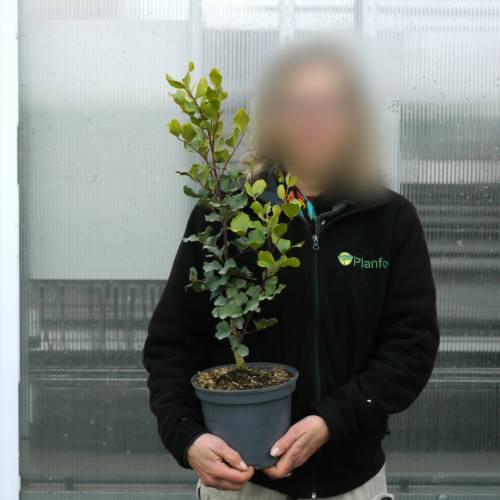
4.54 € Carob tree (Ceratonia siliqua)
9782J1 - Available
-
3.52 € Carob tree (Ceratonia siliqua)
9782J2 - Available
-
3.01 € Carob tree (Ceratonia siliqua)
9782J3 - Available
-
2.75 € Special Offer - 40%
9782J0 - Available
-
2.45 € Carob tree (Ceratonia siliqua)
9782J4 - Available
-
1.95 € Carob tree (Ceratonia siliqua)
9782J5 - Available
-
1.65 € Carob tree (Ceratonia siliqua)
9782J6 - Available
-
1.45 € Carob tree (Ceratonia siliqua)
9782J7 - Available
-
1.35 € Carob tree (Ceratonia siliqua)
9782J8 - Available
-
0.40 € FERTILISER
9782A - Available
-
Area of origin: Middle East
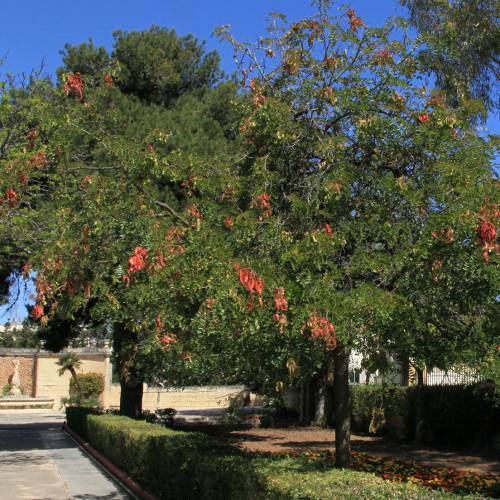
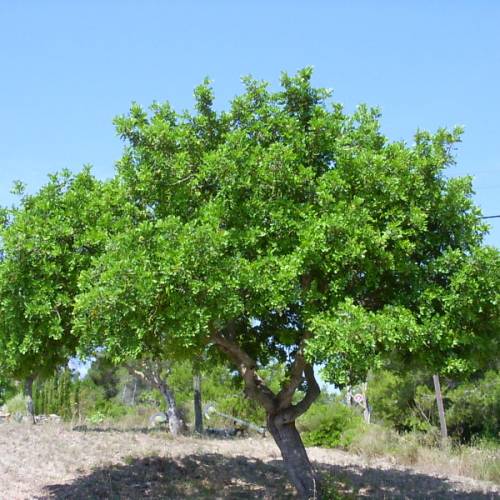
Adult dimensions: Height up to 6m
Foliage: Evergreen
Soil type: Any type, well-drained and stony
Hardiness: Hardy to -7°C for adult trees
Exposure: Full sun
Properties and uses:
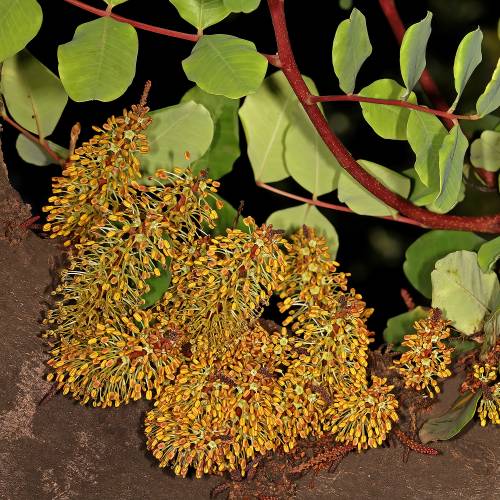
Choosing the Carob tree (Ceratonia siliqua) for your garden is becoming increasingly popular, especially with the climate change. This Mediterranean tree in the pea family (Fabaceae) combines ornamental, ecological and culinary value.
Once well established (after 2 or 3 years), it is highly drought-resistant and requires virtually no watering, even during heatwaves. It is rather undemanding, and thrives in poor, stony, or even calcareous soils, and requires very little maintenance, as it is naturally resistant to diseases and pests. Like all legumes, it has the ability to fix nitrogen in the soil, and its deep root system has an active part in preventing erosion. It tolerates frost down to -7°C once mature, but it is crucial to protect young plants during their first years with winter fleece, like for citrus trees, or by growing them in containers and overwintering them indoors.
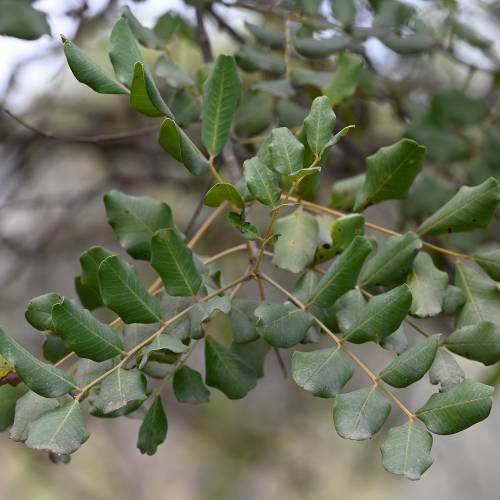
Thanks to its dense, evergreen foliage of glossy, dark green leaves, it provides shade and coolness in summer and maintains strong ornamental value in winter. Its density creates a natural screen, ideal for a privacy hedge or a windbreak.
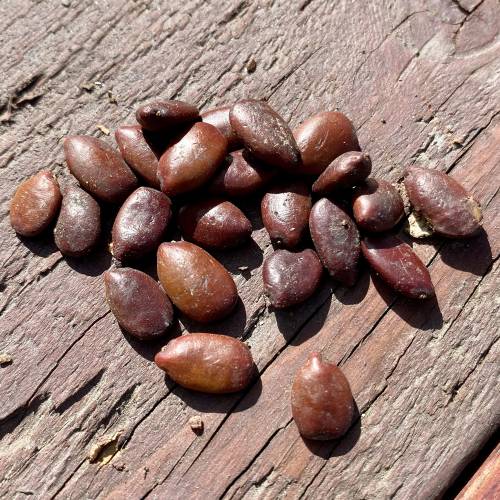
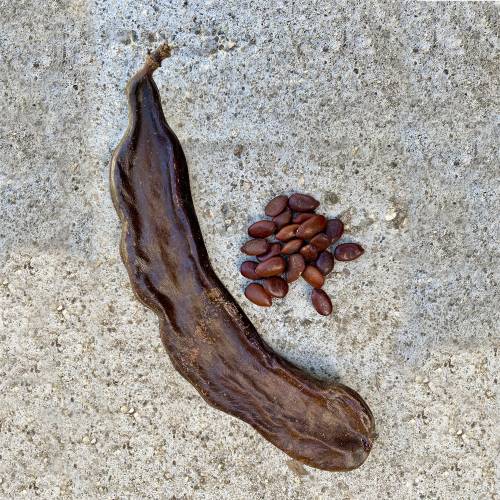
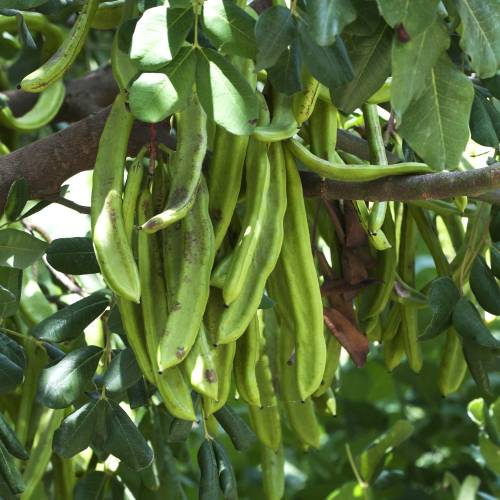
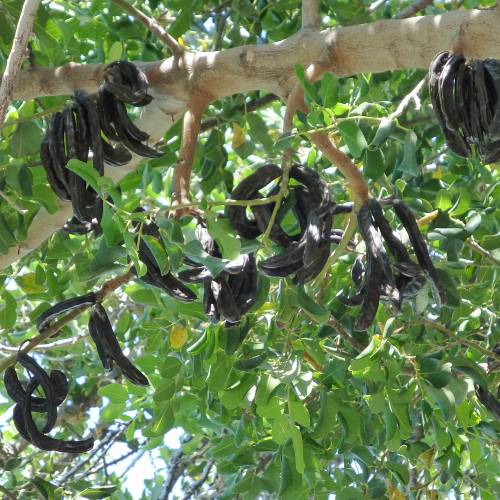
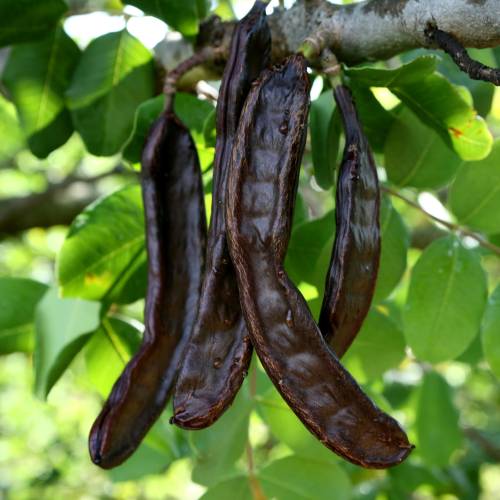
Carob pods, measuring between 10 and 20 cm, contain very hard seeds which, once dried and ground, produce a naturally sweet, chocolate-flavoured flour that can be used as a cocoa substitute. Naturally caffeine-free and low in fat, carob offers several health benefits: it is rich in fibre, calcium, antioxidants and minerals. It is also gluten-free.
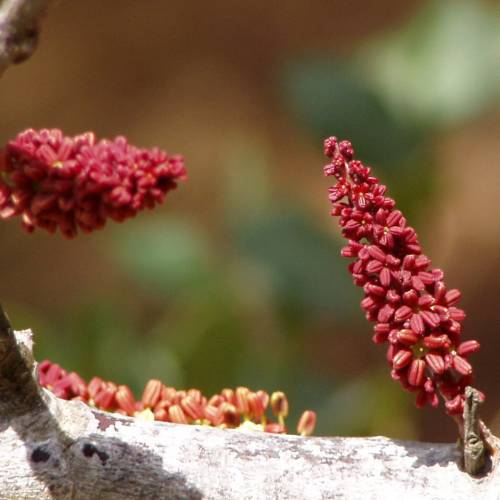
The carob tree is often dioecious, which means that a male and a female tree are required to produce fruit.
The carob is more than just a fruit tree. It is a resilient, productive plant that benefits both health and environment.
Historical anecdote:
The word carat comes from the Greek keration which means “fruit (seed) of the carob tree”. The seeds, which were known for being remarkably uniform in size and weight, were used as a unit of measurement since Roman antiquity in the trade of precious stones. One carat corresponded to the weight of a single carob seed. 1 carat = 0,20 gramme.The carob tree : A variety of the future in agriculture?
The carob tree (Ceratonia siliqua) is considered one of the pillars of modern Mediterranean agroforestry. It is a “plastic-type” tree, able to adapt to climate change and extremely dry conditions while offering a growing financial viability thanks to its pods.
Here is how the carob tree meets new climatic challenges and transforms agroforestry systems:1. Ecological role and soil protection
The carob tree acts like a true "air-conditioner" and soil protector:
- Fights erosion: Its deep, taproot system (which can go 8 times deeper than that of a vine) stabilises slops and fragile soils.
- Microclimate: Its dense, evergreen foliage reduces ground temperature by up to 5°C in summer, protecting understorey cultures from heat stress.
- Improves fertility: Although its ability to fix nitrogen is debated, it enriches the soil with organic matter through the decomposition of its roots and leaf litter, stimulating biological activity.
2. Companion planting models (cropping systems)
In agroforestry, the carob tree is rarely planted alone as it pairs well with other species:
Association Advantages Carob + Olive Traditional model in Marocco and Sicily. Income diversification and efficient land use. Carob + Vine Currently being tested in France (Roussillon) to provide shade for vineyards and diversify plots. Carob + Livestock Fallen or crushed pods are used as nutrient-rich fodder for livestock (sheep, goats). Intercropping Between rows of carob trees, legumes (fava beans, chickpeas) or cereals (barley) are grown during the first years. 3. Economic interest: Mediterranean "black gold"
Interest in the carob tree has recently risen, mainly because of two products derived from its pods:
- The seed: Used to extract the locust bean gum (E410), a natural thickener highly valued by global food and cosmetic industries.
- The pulp: Used as a natural substitute for cocoa (caffeine-free) or for animal food.
4. Planting practices
- Pollination: It is often a dioecious tree. For a good harvest, allow about 1 male tree for every 8 female trees (or use grafted, hermaphroditic varieties).
- Hardiness: It tolerates drought and calcareous soils but remains sensitive to severe frost (its foliage suffers from -5°C).
- Productivity: A grafted tree starts producing after 3 to 5 years, whereas a wild tree starts after 8 years.
-
-
Country Hedge - Farmland Hedge
77 products -
Current plants promotions
409 products -
Fruit Trees
117 products -
Honey Plants
255 products -
Mediterranean gardens plants
192 products -

New Plants
375 products -
Plants for agroforestry
125 products -
Plants for urban micro-forests
67 products -

Top Selling Plants
264 products -
Trees for small garden
75 products -

Trees, Mature Trees
158 products -
Tree species of the future
12 products
-
Prices (15 Offers) from 1.35 € to 89.50 €
Buy: Carob tree
Photos (15) : Carob tree
© Copyright
© Copyright
© Copyright
© Copyright
© Copyright
Date: 11/08/2009
© Copyright