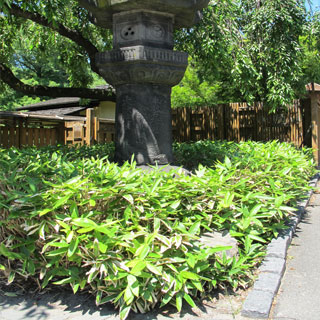
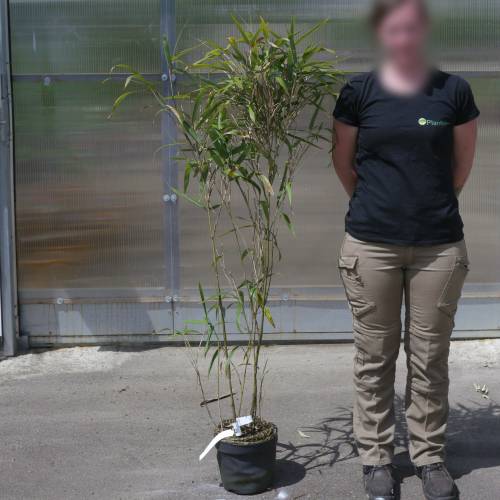
Bamboo Metake Tsutsumiana / Pseudosasa japonica Tsutsumiana
-
32.95 € Bamboo Pseudosasa japonica 'Tsutsumiana'
9274M - Available
-
29.95 € Bamboo Pseudosasa japonica 'Tsutsumiana'
9274R - Available
-
16.50 € Bamboo Pseudosasa japonica 'Tsutsumiana'
9274N - Available
-
14.50 € Bamboo Pseudosasa japonica 'Tsutsumiana'
9274P - Available
-
13.50 € Bamboo Pseudosasa japonica 'Tsutsumiana'
9274Q - Available
-
0.40 € FERTILISER
9274A - Available
-
Geographic Origin: Originates from Japan.
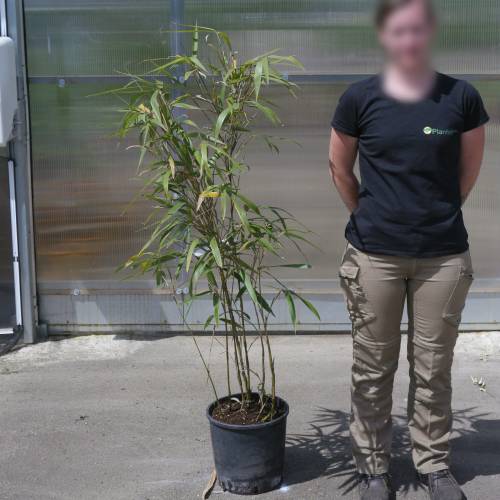
Adult size: 2 to 3.5 metres in height.
Diameter of cane: < 2,5 cm.
Foliage: Evergreen.
Type of soil: Moist and deep. Dislikes excess of lime.
Climate: Drought resistant, if not prolonged.
Exposure: Partial shade.
Hardiness: -25°C.
Root development: Weak runner root system (slightly spreading variety).
Properties and uses:
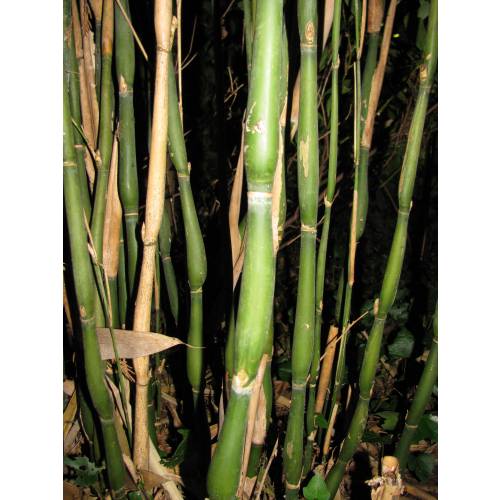
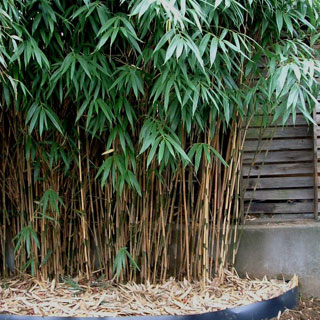
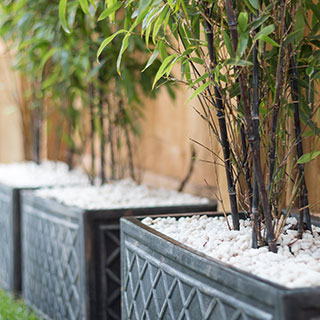
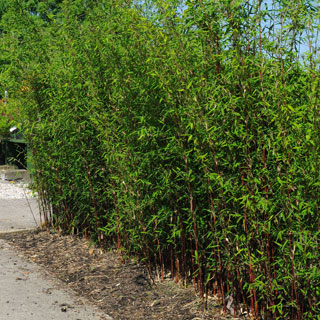
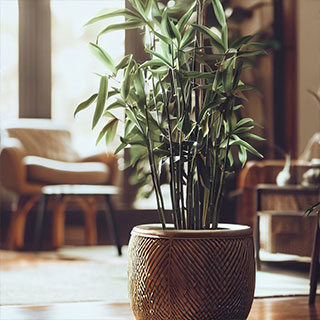
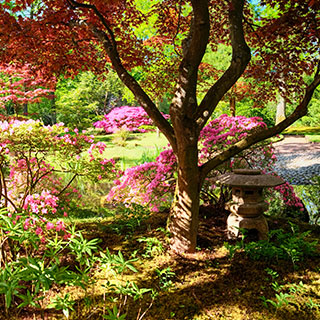
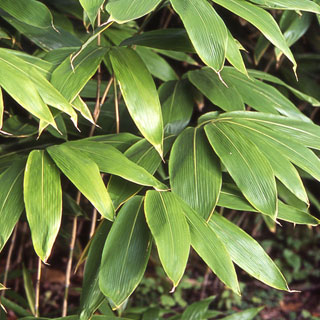
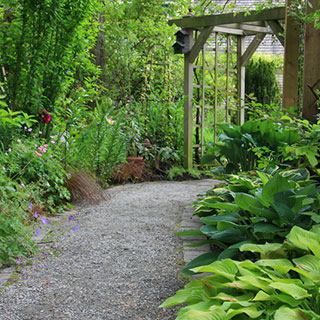
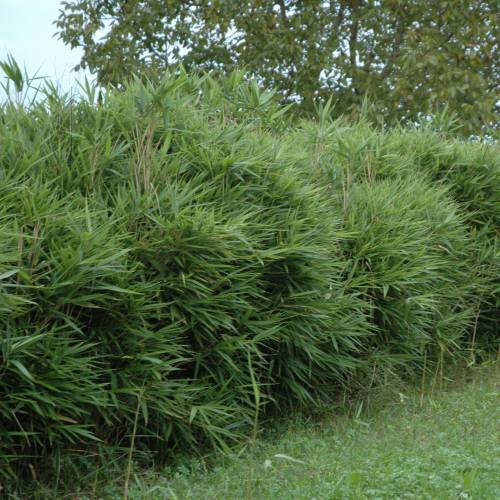
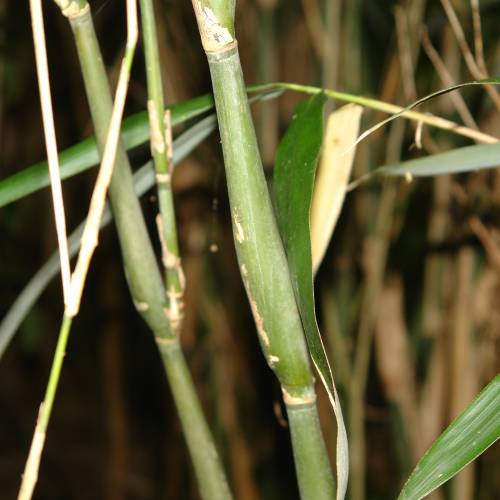
It is happy in a border, hedge, clumps or in a planter. It is very hardy and can be grown in windy positions. Both its canes and leaves are green. Its stem is swollen between the knots, becoming more compact around the knotted area.Tips for planting Bamboos in pots:
For the varieties of Bamboos that grow well in pots Bamboos for planters and pots here are some steps to follow:
1/ A plant in pot needs a special care
As for any plant in pots or planters, it is very important to check and monitor watering and fertilization. In the ground, the plants can draw nutrients they need through their roots, which is not the case for plants in pots that depend on what is available in the growing medium. For Bamboos, make sure to water everyday in summer and once a week in winter. Indeed, most Bamboos prefer moist soil. We recommend fertilizing once to twice a year according to the plant's needs.
2/ Choosing a pot adapted to the Bamboo
In general, the growth of the plants in pots is limited by the available space. It is therefore important to adapt the size of the container to the mature size of the chosen Bamboo.
- For groundcover / dwarf Bamboos : pot depth of 30 to 50 cm / planter of 40 x 40 cm
- For small Bamboos : pot depth of 40 to 60 cm / planter of 50 x 80 cm
- For medium Bamboos : pot depth of 60 to 90 cm / planter of 100 cm x 100 cm or 200 x 200 cm
3/ Planting time
Step 1
- Place a large stone or a small piece of broken pottery at the bottom of the pot, to partially cover the drainage hole while still allowing water to escape.
- Fill the bottom of the pot with coarse material (pieces of pottery, gravel, clay pebbles, etc.) up to 5 cm. This layer prevents waterlogging in the bottom of the pot, and root rot.
- Finally, fill your pot with compost.Step 2
- Position your plant so that the root ball is covered with 3 to 4 cm of compost, to prevent it from drying out.
- Do not compact the substrate so the roots develop well, ensuring the plant's development too.
- Water thoroughly.
Prices (6 Offers) from 13.50 € to 32.95 €
Buy: Bamboo Metake Tsutsumiana
Photos (5) : Bamboo Metake Tsutsumiana
copyright
Pépinières Planfor
copyright
Pépinières Planfor